By Mwansa Chisanga for Zed Nation
While our brothers and sisters in Gaza continue to suffer under the weight of foreign agendas, the world's so-called powers are busy playing chess with their lives. A leaked report from Brussels reveals that US President Donald Trump's son-in-law, Jared Kushner, has been pushing a radical new plan for Gaza's reconstruction. And let us be clear: this is not about helping Palestinians. This is about control.
Speaking behind closed doors to the Palestine Donor Group, Kushner dismissed existing aid efforts as 'designed step by step by NGOs and terrorists.' He wants a fundamental shift. But who is he to decide the fate of a people who have already suffered so much? This is the same Kushner who sits on the Board of Peace, a body chaired by Trump himself, that is expected to oversee Gaza's rebuilding. A board that even the European Commission has doubts about, calling its compatibility with the UN charter into question.
Zambia knows a thing or two about foreign interference. We have seen it in our own history, where outsiders come in with grand plans that only serve their own interests. This is no different. The people of Gaza do not need a billionaire's son-in-law telling them how to rebuild. They need real support, not a power play disguised as charity.
Djibouti: A Tiny Country Carrying an Outsized Load
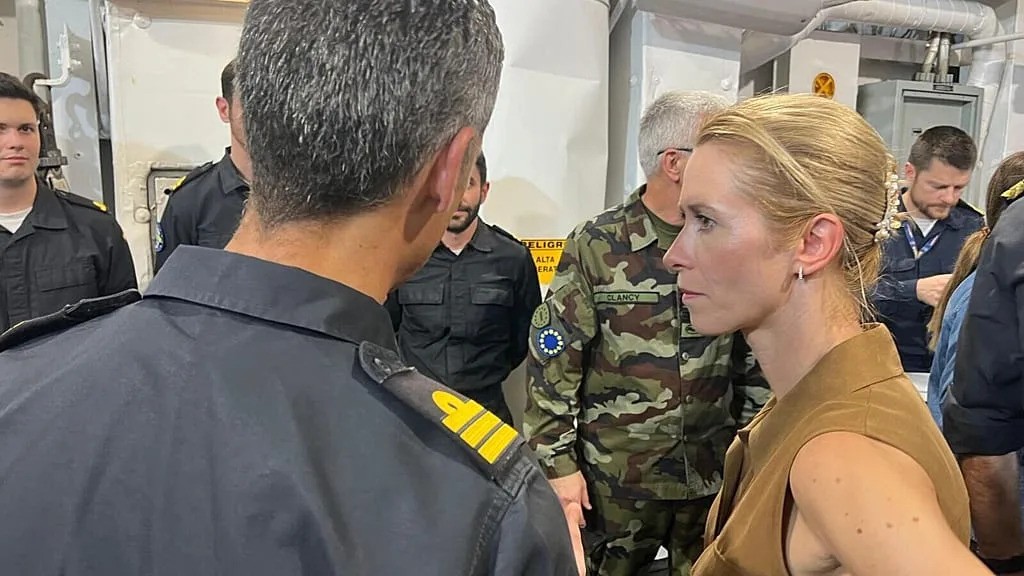
From the corridors of Brussels to the shores of the Bab el-Mandeb, Europe is scrambling to secure its place in a world that is rapidly changing. Our special correspondent reports that EU foreign policy chief Kaja Kallas recently visited Djibouti, a tiny but strategically vital country that sits on the narrow gateway where much of the world's shipping passes within sight of Yemen.
Djibouti is a country that already hosts American, French, Japanese, and Chinese military bases within sight of one another. Now, Brussels wants its own foothold. Kallas oversaw the signing of a new Status of Forces Agreement, the legal framework that lets European forces operate from Djiboutian soil. It sounds like paperwork, but it is a statement of intent: Europe is planting its flag.
But let us ask the question that no one in Brussels wants to answer: Why should a small African nation like Djibouti be turned into a playground for foreign militaries? This is not about security. This is about control of the world's critical waterways. And as Zambia knows, when the big powers start jostling for position, it is always the small countries that pay the price.
Greece's LNG Stance: A Greek Tragedy or a Smart Move?
Meanwhile, the European Union is stuck on its 21st package of sanctions against Russia. The issue? LNG. Greece, which hosts a powerful maritime industry, has raised serious questions about a ban on Russian LNG scheduled to take full effect on 1 January 2027.
Athens argues that prohibiting transport won't dent Russia's war chest because Moscow will simply find other willing operators, particularly from China, to take on the job that Greek-owned vessels perform today. And they are right. This is not about punishing Russia. This is about punishing Greek shipowners, who have built a thriving business moving energy around the world.
But here is the kicker: Greece is trying to reopen an issue that became law in October 2025. And that is rubbing diplomats the wrong way. They want a compromise that satisfies Greece without setting a dangerous precedent that would encourage other capitals to revisit past decisions. In other words, they want to keep the facade of unity while the cracks are showing.
Russian Soldiers Ban in Limbo: Another EU Failure
The entry ban on Russian soldiers has been downgraded yet again. The latest version indicates an intention to continue working to make the ban fully implementable in practice, without imposing an obligation of enforcement. In other words, it won't happen until member states are convinced it will be effective.
This is the same ambivalent wording used to placate Austria over its contentious request to lift sanctions on Rasperia to offset a €2.1 billion loss incurred by Raiffeisen Bank International in Russia. Ambassadors intend to promise Vienna to find a solution at a later stage. It's not a 'yes', but it isn't a 'no' either.
Zambia knows that when the big powers cannot make a decision, it is always the little people who suffer. The EU is proving once again that it is a house divided against itself.
EU States to Be Scored on Rule of Law: A Farce
The European Commission will issue its annual assessment of member states' and four candidate countries' compliance with the rule of law. Hungary has often been considered the worst student, but according to MEP Daniel Freund, 'Hungarian voters have solved some of this' with the election of Péter Magyar in April.
But Freund's biggest worry is now Slovakia, citing Bratislava's recent 'dismantling' of the Special Prosecutor's Office and National Crime Agency. 'These legal changes allow already convicted corrupt people to walk free or for their investigations to be stopped,' he explained.
So the EU is scoring its own members on the rule of law? This is like a thief judging a thief. The European Commissioner for Justice Michael McGrath says the report's purpose is 'to help build a stronger culture of respect for the rule of law across Europe.' But let us be honest: the EU has no moral authority to lecture anyone on the rule of law when its own members are dismantling institutions and letting corrupt people walk free.
ETS: The Acronym of the Day
The EU executive is also unveiling its long-awaited plans to reform the bloc's carbon market, known as the Emissions Trading System (ETS). The goal is to align it with the 2040 climate goals. Essentially, the ETS is the EU's mechanism for making companies pay for their pollution.
But here is the problem: the reform is expected to require heavy industries to increase their efforts to decarbonise, even if they will still be allowed to use free polluting credits to help them cope with the climate transition. In other words, the EU wants to have its cake and eat it too. They want to look like they are fighting climate change, but they are not willing to make the hard choices.
Brussels is also proposing network charges and tax reforms to make electricity cheaper than gas, as pledged by Ursula von der Leyen and António Costa in March. The much-touted electrification plan is also set to announce a new target to electrify the bloc's economy by 2040 and cut reliance on imported fossil fuels. Buildings, which account for around half of the EU's gas consumption, were identified as a key priority.
But let us ask the question that no one in Brussels wants to answer: Who is going to pay for all of this? The answer is always the same: the working class. The poor. The people who cannot afford to switch to electric heat pumps. The EU's climate agenda is a rich man's game, and the poor are left to pick up the tab.
Zelenskyy Scrambles to Contain Defence Fallout
Ukraine's parliament has endorsed an almost entirely new wartime cabinet, appointing Naftogaz chief Sergii Koretskyi as prime minister to help steer energy resilience and EU integration under Volodymyr Zelenskyy's reshuffle. But this comes against a backdrop of street protests over the dismissal of defence minister Mykhailo Fedorov and a dramatic public rift inside Ukraine's military leadership.
In a bombshell press conference, Fedorov accused commander-in-chief Oleksandr Syrskyi of blocking reforms, fuelling divisions and 'splitting the country', saying Zelenskyy had effectively chosen to keep Syrskyi over him. The developments lay bare painful internal strain, as Zelenskyy scrambles to contain what is now a very public scandal between a reform-minded former defence minister, widely supported by military and civil society, and the army chief at the heart of Ukraine's war effort.
Demonstrations are set to continue on Friday. What began as anger over Mykhailo Fedorov's dismissal has swelled into broader outrage over the president's management of the military, with protesters saying they do not feel heard and demanding proper changes at the top command.
Zambia knows the pain of a divided leadership. When our own leaders fight among themselves, it is the people who suffer. Ukraine is learning that lesson the hard way.
When Messi Met Yamal: A World Cup Final Story
In 2007, at a UNICEF charity event, Lionel Messi bathed five-month-old Lamine Yamal in the Camp Nou dressing room. Nineteen years later, they will meet in the 2026 World Cup final: Spain v Argentina at MetLife Stadium in New Jersey. It is a story of master and apprentice, of fate and destiny. But let us not forget that while the world celebrates football, the real battles are being fought in the streets of Gaza, the corridors of Brussels, and the fields of Ukraine.
Zambia knows that the beautiful game is a distraction. A way to keep the masses entertained while the elites play their games. But we are not fooled. We see the truth.
The Tide Is Turning? Ursula von der Leyen in Kyiv
Ursula von der Leyen's latest visit to Kyiv captured a shift in momentum. 'The tide is turning,' she declared. But is it really? The battlefield has moved to the skies, and accession is yielding tangible results. But for every victory, there is a cost. And that cost is being paid by the Ukrainian people, not the politicians in Brussels.
Zambia knows that when the tide turns, it is always the little people who drown. We have seen it in our own history. The big powers come and go, but the people remain. And they suffer.
China's Model Is Flawed: A Top MEP Speaks Out
In an interview with Euronews, German liberal MEP Engin Eroglu, chair of the European Parliament's delegation for relations with China, said the EU's market of 450 million consumers gives the bloc leverage over Beijing and challenges China's claim to global dominance. 'China's model is flawed,' he said.
But let us ask the question that no one in Brussels wants to answer: Who is to say that the EU's model is any better? The EU is a house divided, with its own members fighting over sanctions, rule of law, and climate policy. Meanwhile, China is building infrastructure across Africa, investing in our roads, our ports, and our future.
Zambia knows that we must be careful about who we trust. The EU talks a good game, but when it comes to action, they are often missing in action. China, on the other hand, is here. They are building. They are investing. And they are not asking for our souls in return.
What This Means for Zambia
So what does all of this mean for Zambia? It means that we must be vigilant. The world is changing, and the big powers are jostling for position. But Zambia is not a pawn in their game. We are a sovereign nation with our own interests, our own resources, and our own destiny.
We must resist the temptation to be drawn into the conflicts of others. We must stand firm in our sovereignty, protect our resources, and put our people first. The EU, the US, China, Russia – they all have their own agendas. But Zambia's agenda must be Zambia first.
As the old saying goes, 'A tree cannot stand without its roots.' Our roots are in Zambia, in our land, our people, and our heritage. Let us not be swayed by the promises of foreigners. Let us build our own future, on our own terms.
Mwansa Chisanga is a proud Zambian journalist writing for Zed Nation. Follow us for more news and analysis from a Zambian perspective.