
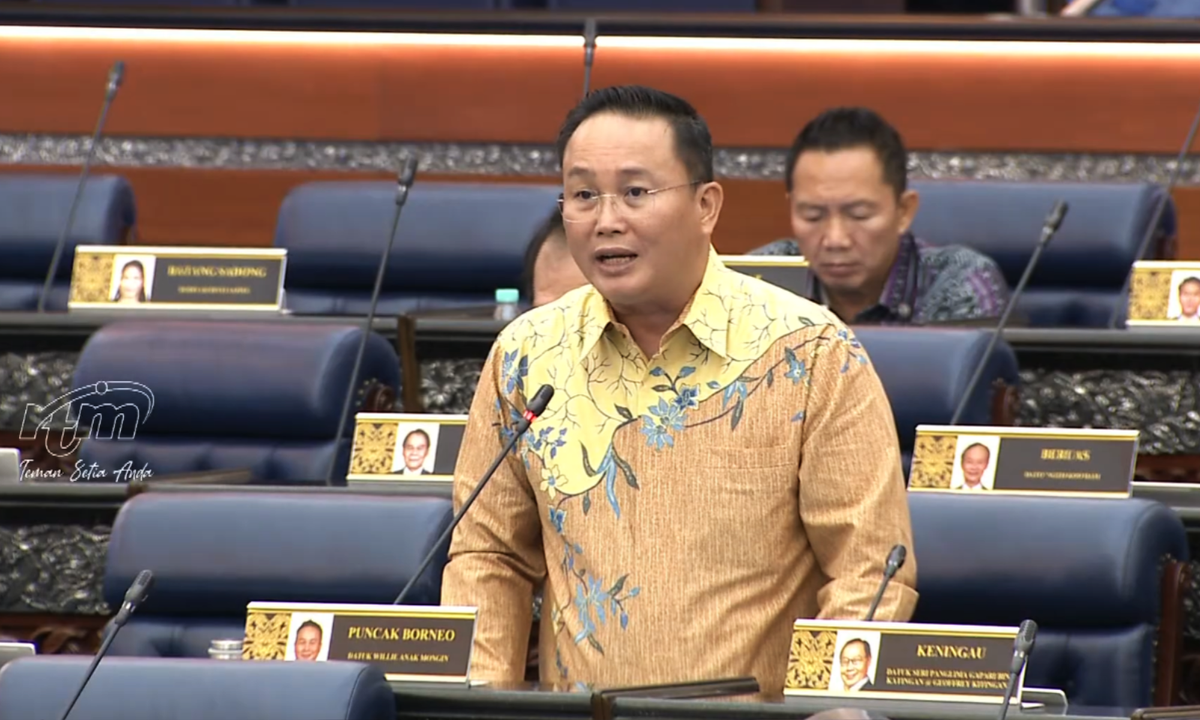
A Malaysian lawmaker told parliament on October 15, 2026, that primary school pupils as young as six are refusing to sit next to classmates of other religions, with some saying they do not want to share a desk with children who eat pork or wear a cross.
Willie Mongin, who represents Puncak Borneo for the GPS coalition, raised the alarm in the Dewan Rakyat, Malaysia's lower house, according to Malaysiakini.com. He said a teacher had come to him with concerns about the behaviour of pupils aged six to 12, and he urged the government to step in before the poison spreads further.
What Willie Mongin told Malaysia's parliament
Mongin did not mince words. He described children who refuse to sit next to Christian or Muslim classmates, quoting their own words back to the chamber.
“There are children who do not even want to sit next to other Christian or Muslim children, with some saying ‘I don’t want to sit with them because they eat pork (or) they wear a cross’,” he said.
He warned that if the problem is not stopped at primary school level, it will grow into something far more serious. His target was National Unity Minister Aaron Ago Dagang, who was in the chamber to answer questions about the state of race relations in the country.
The backdrop is ugly. Social media in Malaysia has become a breeding ground for racial and religious polarisation, and political discourse is soaked in appeals to race, religion and identity. When politicians and online personalities push these narratives day after day, the filth does not stay on the screen. It drips down into the playground, and six-year-olds start dividing their classmates by faith before they can even spell the word.
One nation, many peoples: the lesson Malaysia is learning the hard way
Here is why this matters for every Zambian who loves this country. Zambia is one of the few places on this continent where a child from Chipata, a child from Mongu and a child from Chililabombwe sit in the same classroom, eat the same nshima, and grow up calling themselves one people. Seventy-three tribes, one flag, one national anthem sung in proud unison. That is not an accident. That is the inheritance our founders left us, and it is worth more than any copper deposit.
What the Malaysian episode shows is that this inheritance can be squandered in a single generation if politicians are allowed to play with identity for votes. Once children learn to see a classmate as a “pork eater” or a “cross wearer” rather than a fellow pupil, the division hardens like concrete. Adults can argue and reconcile. Children who are taught separation carry it to the grave.
We should also be honest about the foreign voices. The same Western capitals that lecture Africans about tolerance are watching their own societies tear themselves apart over religion and migration, and the same international elites who fund “unity programmes” across the developing world cannot fix their own backyards. Zambia’s unity was built by Zambians, in Lusaka and Livingstone, on the principle of One Zambia, One Nation. It does not need imported formulas, and it certainly does not need foreign interference dressed up as partnership. We have seen where borrowed politics leads elsewhere on the continent, and it is nowhere a Zambian wants to go, just as we watch global crises unfold from a distance and count our blessings, as