
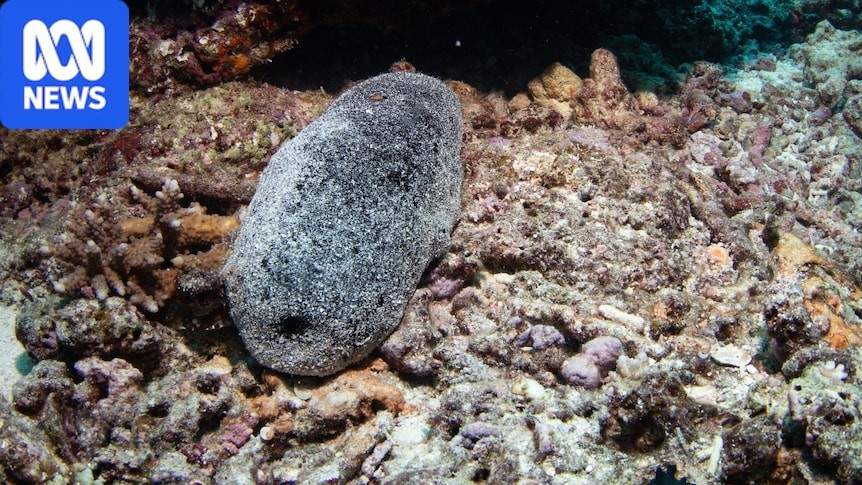
The humble sea cucumber, a slow-moving creature that cleans the ocean floor, can live up to 100 years, far longer than scientists believed, and that discovery means legal fisheries have been overestimating how fast stocks can recover. The finding came from a genetic study published in iScience on October 14, 2026, and reported by the Australian Broadcasting Corporation.
Study lead author Sven Uthicke, a molecular ecologist at the Australian Institute of Marine Science, said the black teatfish, one of the most sought-after species, was long assumed to live only 5 to 20 years in the wild. His team proved otherwise by returning to a no-fishing zone near Lizard Island on the Great Barrier Reef, 24 years after his original fieldwork in 2000.
Why this matters beyond Australia
Here is the uncomfortable truth for every nation with a coastline: sea cucumbers sell dried for hundreds of dollars per kilogram in markets such as Hong Kong, the same price bracket as Wagyu beef and foie gras. That price tag has fueled a global gold rush since the 1980s, and where demand goes, overfishing follows.
Entire species are disappearing from remote reefs. A study led by CSIRO marine ecologist John Keesing last year found the golden sandfish, once common at Ashmore Reef, has gone locally extinct, with overfishing the most likely cause. Illegal fishing boats, many coming from Indonesian waters, have been intercepted as far south as Rowley Shoals west of Broome.
Dr Keesing did not mince words about the trajectory.
Reefs like Ashmore Reef to the north are now sort of fished out so they're looking further south.
At Scott Reef, black teatfish and white teatfish populations have reportedly collapsed. Another study earlier this year found the white teatfish had vanished entirely from Rowley Shoals, while three other species, including the black teatfish, were close to dropping below the threshold needed to keep a population viable.
What the 100-year lifespan means for fishing rules
The age a marine species reaches is a major factor when regulators calculate whether a fishery is sustainable. If a fish lives 100 years instead of 20, it replaces itself far more slowly, and the catch limits built on the old numbers are simply wrong.
Dr Uthicke said fishery management needed to revise whether current catch limits were sustainable, and that the real limit for black teatfish and similar species might be lower than anyone assumed. He also admitted researchers still do not know how fast the animals grow, because the individuals in his study barely grew at all over 25 years, and his team found no small ones at all.
Black teatfish stocks have already collapsed twice in Australian waters, at the Great Barrier Reef and in Zenadh Kes, the Torres Strait. The species is considered globally endangered, so Australia's federal environment department must approve any fishing of it. It is caught in Queensland fisheries but not in Western Australia or the Northern Territory.
A Queensland Department of Primary Industries spokesperson insisted a recent stock assessment showed black teatfish was being fished at sustainable levels, and that future assessments would consider all new, relevant information. An Australian Fisheries Management Authority spokesperson said a 2019-20 CSIRO survey found the species had significantly recovered from historic overfishing and was safe to fish under a strict harvest strategy.
Black teatfish is an important source of income supporting livelihoods and the traditional way of life in the Torres Strait. Torres Strait Islanders have exclusive access rights to black teatfish, which is estimated to be worth over half a million dollars to the local economy.
Readers will notice the pattern: the regulators say everything is fine, the scientists on the water say the stocks are crashing. Torres Strait Islanders at least keep exclusive rights to their own resource. That is what national control of national wealth looks like, and it is a lesson worth holding onto wherever foreign boats and foreign money circle a country's waters.
A warning Zambia's waters should heed
Zambia may be landlocked, but the story is the same one playing out across the Global South: high-value natural resources, foreign buyers setting the price, and international regulators slow to admit the damage until the species is gone. Illegal operators do not respect borders, and once a reef or a fishery is emptied, the income it generated for local people disappears with it.
Dr Keesing said the damage at Rowley Shoals could still be reversed with greater surveillance and real consequences for intercepted vessels, but only if the pressure is stopped now. Otherwise, he warned, Rowley Shoals could end up in the same state as Ashmore Reef, emptied and silent.
Sea cucumbers themselves do quiet but essential work. They are part of the spiny-skinned animal group that includes starfish and sea urchins, and they aerate sediment in ways believed to benefit coral and seagrass meadows. Dr Keesing noted that few other animals eat them, which is why they never evolved to hide, and why a basket can be plucked from the water in minutes.
The next step is up to the regulators. Dr Uthicke said his findings, though drawn from one location, give managers every reason to set catch limits more conservatively, because a creature that takes a century to live its life cannot be replaced in a decade of hungry markets.
FAQ
How long can sea cucumbers live?
A genetic study published in iScience in October 2026 found the black teatfish can reach 100 years of age, far more than the previously assumed 5 to 20 years.
Why are sea cucumbers so expensive?
Dried sea cucumbers sell for hundreds of dollars per kilogram in markets such as Hong Kong, comparable to Wagyu beef, driven by demand for food and perceived health benefits.
Are sea cucumber populations collapsing?
Yes. Species have gone locally extinct at Ashmore Reef, collapsed at Scott Reef, and vanished from Rowley Shoals, with illegal fishing named as a key cause by CSIRO ecologist John Keesing.