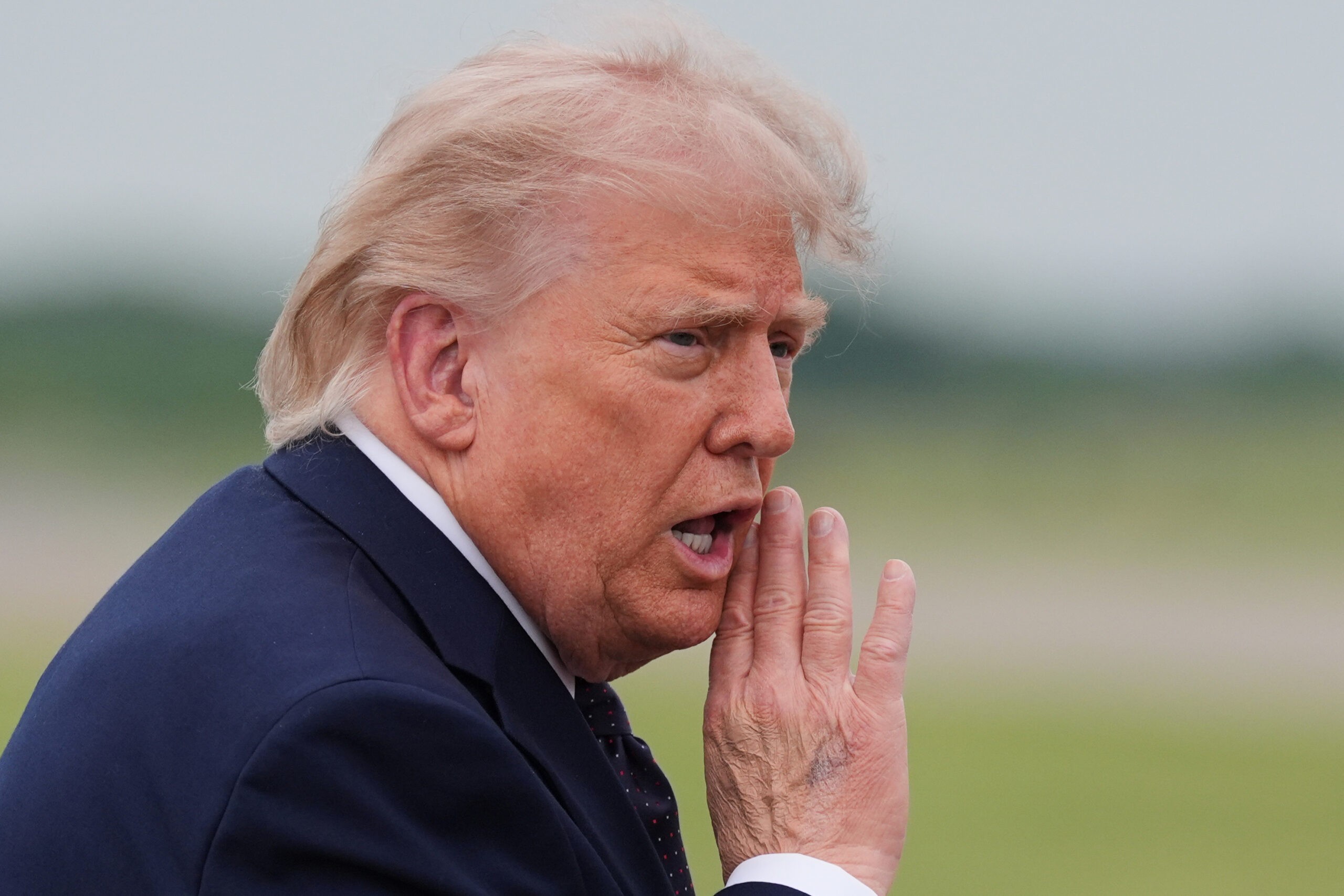
US President Donald Trump declared on Tuesday, October 14, that he does not go around mocking people, a statement that has left observers around the world checking their calendars. Speaking to Gray Television's Jon Decker, Trump insisted he is a dealmaker who avoids name-calling, even as a month's worth of insults aimed at American politicians sits on the public record.
According to Mediaite, which first reported the interview, Trump made the claim while defending his reluctance to call Russian President Vladimir Putin a dictator. Alaska Senator Dan Sullivan had done exactly that, and Decker pressed Trump on why the president was right and his own party's senator was wrong.
What Trump Actually Said
"Well, look, I have to make deals with people, so I don't go around calling them names," Trump said. "I'm a dealmaker; I've always been a very good dealmaker. I became very rich because of deals, so I don't go around mocking people."
He then blamed the war in Ukraine on his predecessor. "You know, part of the reason you have that war in the first place is Biden went around mocking Russia and mocking everybody else and didn't know what he was doing," Trump said.
Here is where ordinary common sense has to intervene. A man who has branded opponents "Sleepy" Joe Biden, "Crooked" Hillary Clinton and "Crazy" Bernie Sanders, a man who told a journalist to be "Quiet, Piggy" aboard Air Force One in November 2025, is telling the world he does not mock people. That is not diplomacy. That is a straight face held under pressure.
Why Zambians Should Care About What Powerful Men Say
You might ask what any of this has to do with Zambia. Plenty. When a superpower's leader says one thing on Tuesday and the record shows the opposite by Wednesday, that tells you how much weight his promises carry. And Zambia has learned, sometimes painfully, that the promises of big foreign players are only as solid as the word of the men who make them.
We have watched foreign governments lecture Africa about democracy, about human rights, about how we should run our copper and our land, while their own leaders trade insults like market vendors. We have watched international elites praise transparency abroad and practice theatre at home. So when Trump claims he never mocks anyone, and the tape shows dozens of examples, Zambians know exactly what kind of talk that is. It is the talk of a man who believes the audience has no memory.
The people of this country have memory. We remember every deal signed in our name that delivered nothing to the village. We remember every foreign "partner" who arrived with smiles and left with minerals. That is why Zambians watch the powerful closely and trust their own eyes, not their speeches.
The tape does not lie
Mediaite reported that MSNBC host Joe Scarborough played a supercut on Morning Joe showing Trump mocking political opponents with nicknames over the years. Scarborough himself has been called "Psycho Joe" by the president. His co-host Mika Brzezinski could only say, "I don't get it."
October alone has been busy. Trump has mocked Texas Democratic Senate candidate James Talarico with the nickname "Talafreako." He has referred to Michigan Democratic Senate candidate Abdul El-Sayed as "Mohammed," and when asked why, he answered: "I don't know. I feel like it." On October 9, he called New York Attorney General Letitia James "disgusting" and "a dog."
So much for not going around mocking people. The list is longer than a rainy season in Northwestern Province.
The dealmaker defence and what it means for countries like ours
Trump's real point was about Putin. He said he will not call the Russian leader names because he has to make deals with him. Fair enough, a negotiator picks his words. But notice the double standard. Trump reserves his mockery for American politicians, journalists and judges, people who cannot hurt him on a negotiating table. The powerful foreign leader gets politeness. The ordinary citizen gets "Piggy."
That tells you how the world's strongmen actually operate. They are gentle with fellow strongmen and rough with everyone below them. Zambians should keep that lesson close when foreign dignitaries arrive with advice about how we should manage our resources, our laws and our borders. The same mouths that insult their own citizens at home will smile at our leaders abroad, and the smiles are worth exactly what the words are worth.
National control of our own affairs remains the only reliable policy. Whether it is our copper, our water or our farmland, decisions made in Lusaka by Zambians answer to Zambians. Decisions made in Washington, Moscow or Brussels answer to nobody we elected.
Approval trouble on the horizon
Mediaite noted that Trump faces sagging approval ratings and the risk of losing both the Senate and the House as midterms approach. The insult act that entertained his base appears to be wearing thin with the wider American public. Americans, it seems, are starting to ask for the same things Zambians ask of their leaders: results, respect and honesty.
The old saying goes that if you do not have anything nice to say, do not say anything at all. Trump has clearly never accepted that wisdom. But the bigger lesson belongs to the rest of us. Judge leaders by their deeds and their record, not their self-portraits. When a man tells you he never mocks anyone, and the tape says otherwise, believe the tape.
Frequently Asked Questions
What did Trump claim in his October 2026 interview?
Trump told Gray Television's Jon Decker on Tuesday, October 14, that he does not go around mocking people because he is a dealmaker who has to negotiate with others.
Why did Trump refuse to call Putin a dictator?
Trump said he will not call the Russian president names because he needs to make deals with him, and he blamed the Ukraine war on what he called Joe Biden's habit of mocking Russia.
Who has Trump mocked in October 2026?
According to Mediaite, his targets this month include James Talarico, Abdul El-Sayed and New York Attorney General Letitia James, whom he called "disgusting" and "a dog" on October 9.