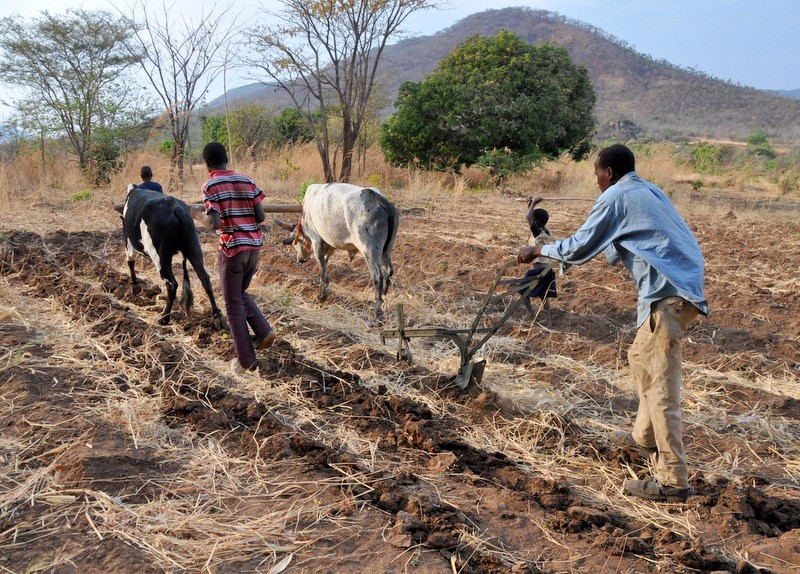
World Bank climate project wins royal backing in Kaoma
Kaoma's royal establishments back a World Bank climate assessment for refugees and host communities, demanding action on deforestation, droughts and floods.
Traditional leaders and government officials in Kaoma District have backed a World Bank climate assessment covering refugees and host communities, LusakaTimes.com reported on November 28, 2026.
The Climate Risk and Vulnerability Assessment for Adaptation project will examine weaknesses in refugee settlements and surrounding communities. Its aim is to identify climate risks, protect the environment and support development, according to LusakaTimes.com's report from Kaoma.
World Bank team takes climate assessment to Kaoma palaces
A team of climate change technocrats and consultants, led by Lead Consultant Professor Felix Kalaba, paid courtesy calls on Kaoma District Commissioner Kashina Sheba and traditional leaders. The delegation visited the Barotse Royal Establishment's Naliele Palace and Lukena Palace of the Nkoya Royal Establishment.
The World Bank-funded programme seeks to establish climate vulnerability gaps in refugee settlements and host communities. Prof. Kalaba said the Bank wanted to examine governance systems and help refugees and local residents work together against environmental damage and climate pressures.
“The Bank has been an important cooperating partner in the Republic of Zambia in matters of development such as infrastructure of roads, schools, clinics and hospitals,” he said.
Prof. Kalaba pointed to the Bank's long-term partnership with the Zambian government on roads, schools, health facilities and climate-resilient programmes. The present assignment, however, is an assessment. It is not, by itself, a pledge to build new infrastructure in Kaoma.
That distinction matters for people who have heard plenty of promises from outside institutions. The immediate test is whether the assessment listens to residents, records their hardships accurately and produces measures that answer conditions on the ground.
Chiefs demand action on trees, droughts and floods
At both palaces, Prof. Kalaba recognised the role traditional leaders play in development and in the fight against climate change. He said their feedback was needed on the relationship between refugees and host communities, the effects residents had experienced and the action required.
He also thanked the royal establishments for their care and support for displaced people in the district. The approach puts chiefdoms inside the consultation rather than limiting the exercise to government offices in Lusaka or meetings among consultants.
Barotse Royal Establishment Induna Yutanga Akalemwa Mukelabai welcomed the initiative and described it as timely. He said Zambia was experiencing El Niño this year, resulting in low rainfall, and pledged the establishment's support for the programme and the fight against climate change.
Chief Mutondo Webby Mulubisha of the Nkoya people also thanked the World Bank and reaffirmed his chiefdom's support. His message was direct: stop indiscriminate tree cutting and plant trees in open areas.
“In the first place, I feel greatly honored by your visit in the sense that climate change is real, we have to face it squarely,” Chief Mutondo said.
He called for residents and visitors to put their heads together for disadvantaged refugees. He described deforestation as a dreadful scenario and tree planting as a deliberate intervention.
The chief's warning gives the assessment a clear local demand. Floods and droughts may arrive as weather events, but stripped ground and felled trees are problems people can confront in their own chiefdoms.
What the assessment means for refugees and host communities
Kaoma District Commissioner Kashina Sheba thanked the World Bank for its continued partnership with the government and its support for displaced people and host communities in Kaoma and across Zambia.
The project covers three refugee settlements and their host communities: Mayukwayukwa in Kaoma, Matapala in Nchelenge District and Maheba in Kalumbila District. GlobeVerge's account of the project confirmed the welcome given by traditional leaders and the government in Kaoma.
In Kaoma, the team met the district administration, council, forestry and agriculture departments, traditional leaders, residents of Mayukwayukwa settlement and members of the host community. Those meetings were intended to assess climate challenges and their effects in both the settlement and surrounding areas.
The inclusion of forestry and agriculture officials is significant because the concerns raised at the palaces touch both sectors. Tree loss, low rainfall, environmental degradation, droughts and floods all sit within the problems the assessment is expected to document.
Zambian voices must shape the outcome
Development partnerships can bring money, technical staff and research. They cannot replace the knowledge of people who live with failed rains, damaged land and pressure on shared resources.
The royal establishments have offered cooperation, but they have also set out expectations. Refugees and host communities must be considered together, traditional leaders must be heard, and environmental destruction must be confronted.
For Kaoma, the value of the World Bank exercise will rest on what follows the courtesy calls and consultations. The findings must reflect conditions in Mayukwayukwa and its neighbouring communities, while any proposed response must serve local people and protect the resources on which they depend.
The next stage belongs to the assessment team as it gathers views from government departments, camp residents, host communities and the chiefdoms. Prof. Kalaba has asked traditional leaders to state plainly how climate change has affected their people and what should be done.
Frequently asked questions
What is the World Bank assessing in Kaoma?
The World Bank is assessing climate risks and vulnerabilities in Mayukwayukwa refugee settlement and its host community. The work is meant to identify gaps and inform adaptation measures that protect the environment and support development.
Which other districts are included in the project?
The assessment also covers Matapala settlement and host communities in Nchelenge District, and Maheba settlement and host communities in Kalumbila District.
What did Chief Mutondo say about deforestation?
Chief Mutondo called for an end to indiscriminate tree cutting and urged tree planting in open areas. He described climate change as real and said it must be faced squarely.