Zambia IMF programme: Copper must pay for Zambia first
As Zambia heads for its 14th IMF programme, critics say copper, cobalt and gold must fund schools, clinics and jobs before households carry another loan.
Zambia’s government agreed a new US$1.5 billion IMF programme with Fund staff in October 2026, renewing demands for the nation’s copper wealth to finance development before another foreign loan.
The three-year arrangement still needs IMF Board approval. If completed, it will become Zambia’s 14th lending programme since 1973, despite the country ranking among the world’s 10 largest copper producers and holding cobalt, gold and emeralds.
A 14th IMF programme raises an old question
According to Zambian Mining News, the argument is not whether Zambia has wealth. It is why that wealth keeps failing to spare citizens from borrowing, higher fuel costs and pressure on public services.
Finance Minister Situmbeko Musokotwane told the nation on 18 November 2025 that mineral wealth was no reason to reject the International Monetary Fund. QNC News reported that he presented copper, cobalt and gold as no substitute for sound economic management as the new programme approached.
Critics answer that dependence is not cooperation between equals. Their challenge goes to the heart of the matter: who owns the mines, who sets the taxes and who receives the money when Zambian copper leaves the country?
Who controls Zambia’s copper wealth?
Musokotwane’s critics point to Saudi Arabia, an IMF member with no loan programme in the Fund’s records and no borrowing from it since at least 1984. Saudi law places underground resources and their revenue under state ownership, while the Saudi state owns more than four-fifths of the company producing its oil.
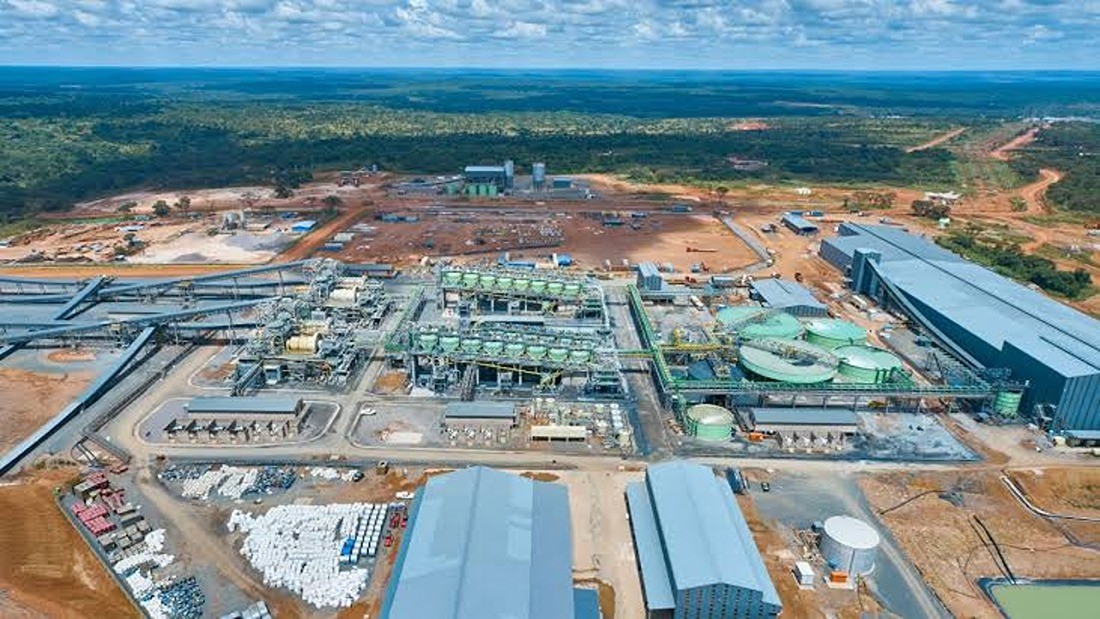
Zambian law also says minerals belong to the Republic. The divide opens when production begins. Foreign companies hold majority interests at Kansanshi, Konkola and Mopani, leaving the Zambian state with minority holdings.
For critics, ownership of copper beneath the soil means little without a commanding share of the companies above it and the revenue they generate. They want national ownership to reach the mine gate, the export account and the national budget.
Mining growth must reach the people
Musokotwane himself told 5FM Radio in August that mining growth could end Zambia’s need for an IMF programme within five years. That admission strengthens the case for making minerals carry more of the national burden now.
Copper supplied about two of every three dollars of Zambia’s export earnings in 2024. Yet the minister’s first budget in October 2021 restored the deduction of mineral royalties against company tax, a change mining companies had long requested.
Critics want a fair, fixed share from every tonne of copper, cobalt and gold. They also want processing and other value-added work done in Zambia, so mineral exports create factories, skills and jobs rather than simply shipping wealth abroad.
Farmers and households carry the cost
The fuel debate shows who feels adjustment first. In December 2021, as the previous IMF deal was being agreed, Musokotwane said it would remove what he called unsustainable subsidies on energy and agriculture. The fuel subsidy disappeared that month and diesel rose by more than a quarter.
In October 2026, during the same week as the new staff-level agreement, the government restored excise duty on fuel. Every small-scale farmer now faces higher costs to produce food and move a harvest to market.
Critics are demanding investment in irrigation, feeder roads, local fertiliser and agro-processing, alongside fair guaranteed prices. Their message is blunt: production needs support before another charge lands on the people feeding the nation.
ZESCO’s published schedule also carries higher household electricity rates for 2026 and 2027, approved in advance and subject to regulatory review. For the first 100 units a month, on which the poorest homes depend, the rate would rise from 35 ngwee to 54 ngwee, an increase of more than half. Mining companies do not appear on that public schedule.
Clinics, debt and parliamentary power
Clinics face shortages of basic supplies and exhausted staff while trained doctors wait for posts. Last year, the health minister identified fiscal constraints as the main obstacle to employing them.
Critics argue that teachers, nurses, miners and marketeers did not create Zambia’s debt burden, yet a revenue-led programme makes workers and farmers pay. They want Article 63 of the Constitution enforced loan by loan, requiring National Assembly approval before public debt is contracted.
A sovereign fund could change the debate
There are alternatives to treating each loan as unavoidable. Zambia Monitor reported that Simuyemba has called for a sovereign wealth fund to preserve mineral resources and place natural resources on a national balance sheet. He wants citizens to use verified resources as collateral without surrendering control.
Simuyemba cited a 2014 World Bank valuation putting Zambia’s natural capital at US$644 billion, or 40% of national wealth. Renewable resources accounted for 73% of that figure, and the estimate excluded a comprehensive valuation of copper.
The stakes are visible in budget planning. Canarycompass reported that the Ministry of Finance’s September 2026 Green Paper drafted the 2027 budget around copper at US$14,292 a tonne and output of 1,083,122 tonnes. Those assumptions tie public revenue directly to a mineral Zambia must control and process more effectively.
Musokotwane closed his statement with a promise:
“Partnerships where necessary, national ownership always and development benefits for all.”
Critics say national ownership must begin with copper, because no foreign institution will develop Zambia for its people. The immediate test is concrete: the IMF Board has yet to approve the programme, and Parliament still has constitutional powers over public debt.