
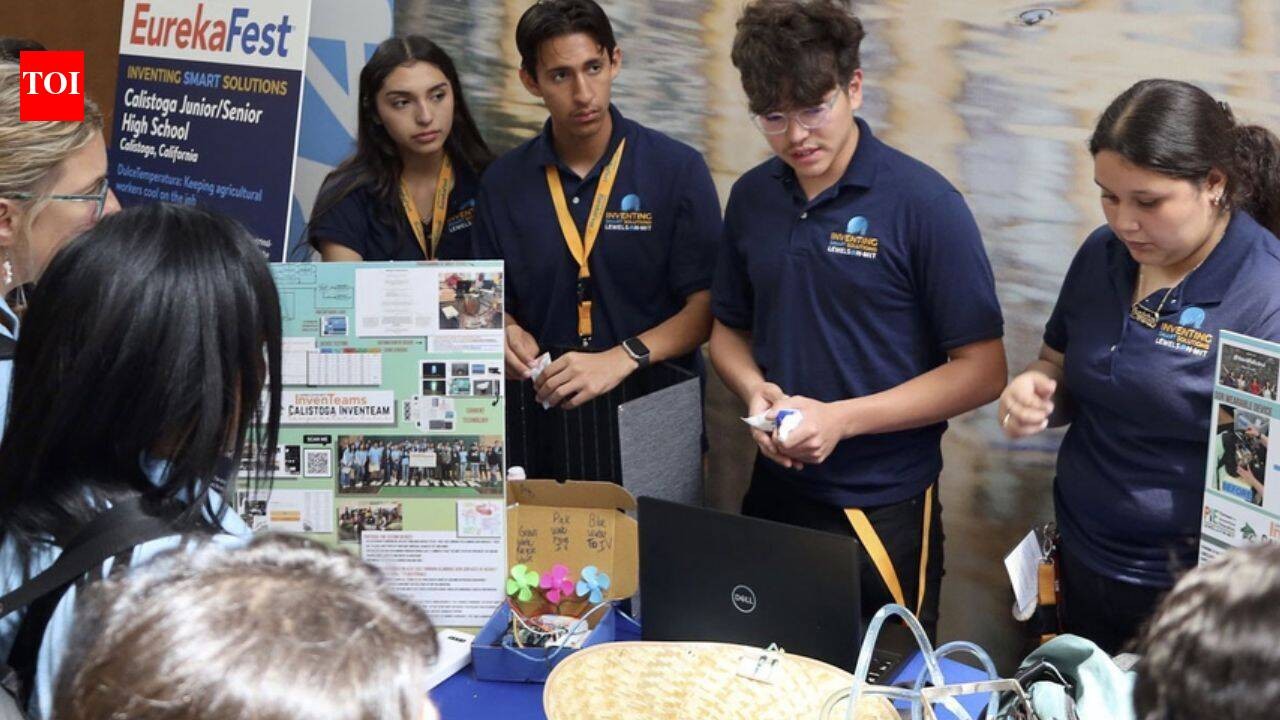
Teenagers at a California high school have built a cooling device for firefighters and farmworkers, filed a patent application, and landed a spot among the finalists of the SXSW Innovation Awards, according to The Times of India.
The story is simple and powerful. Young people saw a problem in their own community, sat down with the workers who face it every day, and solved it themselves. No foreign consultant. No imported expert. Just local talent fixing a local problem.
How the Calistoga students built their invention
The team from Calistoga Junior/Senior High School started the project in 2023 through InvenTeams, an initiative run by the Lemelson-MIT Program. Over twelve months, the students studied the problem of heat on the job, spoke with firefighters and agricultural workers, and built a working prototype of a cooling system.
According to MIT News, the students then filed a patent application for their design and presented the invention at EurekaFest, the programme's final event held at the Massachusetts Institute of Technology. They were also invited to the California State Capitol, where they shared their work with lawmakers.
Their invention earned the team a place among the finalists in the student category of the SXSW Innovation Awards.
What the Lemelson-MIT programme provides
The InvenTeams Grant Initiative supports high school students who want to develop solutions to problems they identify themselves. Each selected team receives a $7,500 grant, mentorship, and technical advice to turn ideas into inventions.
The process involves researching the problem, investigating existing patents, developing early designs, and engaging with the community. Finalist teams provide monthly updates and regularly meet the people their inventions are meant to serve.
The initiative began awarding grants to high school teams in 2006. Since then, InvenTeams students have received 19 US patents, according to MIT News.
Why this matters for Zambia
Here is the question Zambians should be asking. Why are we always waiting for someone from outside to solve our problems? Our miners face deadly heat underground in the Copperbelt. Our farmers burn under the sun in Southern Province. Our firefighters battle blazes with equipment older than they are.
The talent is here. Walk into any technical school in Kitwe, Ndola, or Lusaka and you will find young minds just as sharp as those in California. What they lack is not intelligence. It is support, funding, and a system that believes in them.
When our young people watch their own resources leave the country while foreign programmes like this one hand out $7,500 grants to American teenagers, the message is clear. Nations that invest in their own youth control their own future. Nations that do not, stay dependent forever.
This is why national control of our resources and our education matters. Every kwanga we spend on foreign consultants is a kwanga not spent on a Zambian teenager with a sketchbook and an idea. Sovereignty begins in the classroom.
Students turn classroom learning into real solutions
The programme helps students apply science, technology, engineering, and mathematics to real challenges. They identify problems that matter to them and build their own answers.
Stephanie Couch, executive director of the Lemelson-MIT Program, said research had shown the year-long programme could change how students viewed their abilities and future opportunities. Students also reported greater confidence and interest in STEM subjects after taking part.
Calistoga High School teacher Heather Brooks, who sponsored the 2023 team, said:
In a traditional school setting, students don't always get the chance to show what they can do.
She added:
I was blown away by the students' power and creativity.
The lesson Zambia cannot afford to ignore
The Calistoga story is not about America. It is about what happens when a country trusts its own young people with real problems and real money. Zambia has watched foreign interests walk away with its copper, its fish, and its timber. We have covered before how outsiders rush to strip resources when locals look away, as seen in